

 تويت
تويت
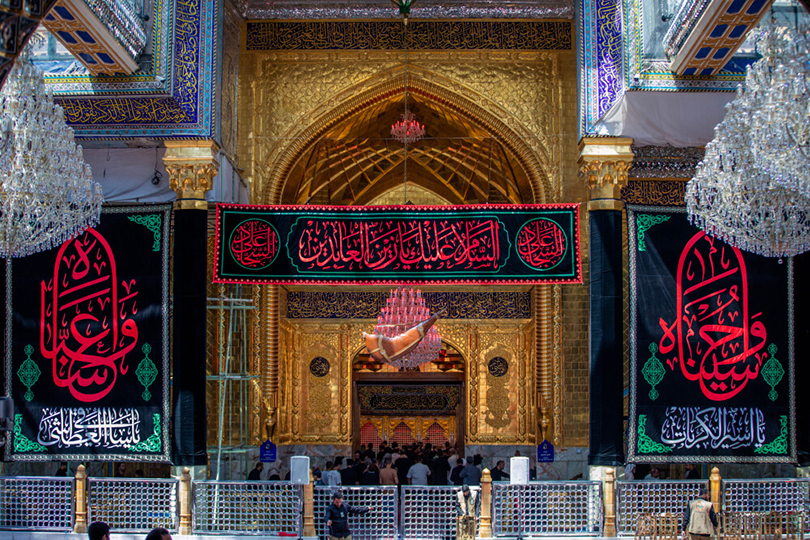
Imam Ali ibn al-Husayn (Peace Be Upon Him)
A Brief Biography of the Imam (PBUH)
He is Imam Ali ibn al-Husayn ibn Ali ibn Abi Talib, the fourth Imam of the Ahl al-Bayt (the Prophet's Household). It is sufficient for his honor, glory, dignity, and noble status that his father
 s the Master of the Youth of Paradise, his grandfather s the Leader of the Successors and Commander of the Faithful, his grandmother s the Leader of the Women of the Worlds, and his great-grandfather s Muhammad ibn Abdullah, the Seal of the Prophets and Messengers and the noblest of Allah’s creation.
Birth
Imam Ali ibn al-Husayn (PBUH)s born in Medina, in the house of Lady Fatimah (peace be upon her), in the year 38 AH (658–659 CE).
Different narrations mention different dates for his birth, including:
Imam Ali ibn al-Husayn (PBUH)
s born in Medina, in the house of Lady Fatimah (peace be upon her), in the year 38 AH (658–659 CE).Different narrations mention different dates for his birth, including:
- The 5th of Sha'ban
- The 15th of Jumada al-Ula
- The 15th of Jumada al-Akhirah
- Other reported dates
His Kunyah and Titles
His most well-known kunyah (honorific name)s:
His most well-known kunyah (honorific name)
s:- Abu al-Hasan
- It is also reported that he s called Abu Muhammad.
Among his many honored titles are:
- Zayn al-Abidin (Adornment of the Worshippers)
- Sayyid al-Abidin (Master of the Worshippers)
- Adornment of the Righteous
- Heir to the Knowledge of the Prophets
- Successor of the Successors
- Guardian of the Legacies of the Messengers
- Leader of the Believers
- Beacon of the Devout
- The Humble
- The One Who Worshipped at Night
- The Ascetic
- The Devout Worshipper
- The Just
- The One Who Wept Frequently
- Al-Sajjad (The One Who Constantly Prostrated)
- Dhu al-Thafanat (The One with Calloused Marks from Prostration)
- Leader of the Ummah
- Father of the Imams, from whom the descendants of Imam al-Husayn continued.
Several traditions explain the origins of these titles.
Imam Ja'far al-Sadiq (PBUH) narrated:
"On the Day of Resurrection, a caller will proclaim: 'Where is Zayn al-Abidin?' It is as though I can see Ali ibn al-Husayn lking gracefully through the ranks."
lking gracefully through the ranks."Imam Muhammad al-Baqir (PBUH) also said that whenever his father received a blessing from Allah, recited a verse requiring prostration,
s protected from harm, completed an obligatory prayer, or reconciled two people, he would immediately prostrate in gratitude. The marks of prostration became visible on his body, and for this reason he became known as Al-Sajjad (The Constant Prostrator).Imam al-Baqir also related that his father developed thick callouses at the places where he regularly prostrated, which were removed twice every year. Because of these marks, he became known as Dhu al-Thafanat (The Possessor of the Callouses).
From: The Master of Those Who Wept, Majalis al-'Itrah Series, published by the Islamic Knowledge Cultural Association.
- Al Yasin, Shaykh Muhammad Hasan, The Twelve Imams, Vol. 1, p. 327.
- Al-Tabari ibn Rustam, Dala'il al-Imamah, Vol. 2, p. 191.
- Al-Mufid, Al-Irshad, Vol. 2, p. 137. See also: Al-Kulayni, Al-Kafi, Vol. 1, p. 466.
- Al-Irbili, Kashf al-Ghummah, Vol. 2, p. 285; Ibn Talhah al-Shafi‘i, Matalib al-Su'ul, p. 84; Al-Shahid al-Awl, Al-Du
 s, Vol. 2, p. 12.
 - Al-Tusi, Misbah al-Mutahajjid, p. 551.
- Ibn Shahr Ashub, Manaqib Al Abi Talib, Vol. 4, p. 175; Al-Tabarsi, I'lam al-Wara bi A'lam al-Huda, p. 251.
- See: Sayyid Abd al-Razzaq al-Muqarram, The Life of Imam Zayn al-Abidin, p. 36, where he records eight different opinions concerning the Imam's date of birth.
- Al-Irbili, Kashf al-Ghummah fi Ma'rifat al-A'immah, Vol. 2, p. 289.
- Ibn Shahr Ashub, Manaqib Al Abi Talib, Vol. 4, p. 175.
- Al-Saduq, 'Ilal al-Shara'i', Vol. 1, p. 269.
- Ibid.
- Ibid. Thafanah refers to the hardened callous that forms on a camel's knees and other parts of its body through frequent kneeling, and by analogy, the callouses formed from frequent prostration.
- Al-Mufid, Al-Irshad, Vol. 2, p. 137.
- Al-Majlisi, Bihar al-Anr, Vol. 46, p. 11; Al-Qutb al-Randi, Al-Khara'ij al-Jara'ih, Vol. 2, p. 751.
- Al-Qutb al-Randi, Al-Khara'ij al-Jara'ih, Vol. 2, p. 751.
- Ibid.
- Al-Saduq, 'Uyun Akhbar al-Rida, Vol. 2, p. 136.
- Al-Kulayni, Al-Kafi, Vol. 1, p. 467.
- Shaykh Abbas al-Qummi, Muntaha al-Amal, Vol. 2, p. 57.
- Sayyid Muhsin al-Amin, A'yan al-Shi'ah, Vol. 2, p. 464.
- The Holy Qur'an, Surah Al 'Imran (3:134).
- Al-Mufid, Al-Irshad, Vol. 2, p. 145.
- Sibt Ibn al-Jawzi, Tadhkirat al-Khass, p. 328.
- Al-Qutb al-Randi, Al-Khara'ij al-Jara'ih, Vol. 2, p. 586.
- Al-Kulayni, Al-Kafi, Vol. 2, p. 123.
- Al-Mufid, Al-Irshad, Vol. 2, p. 149.
- Al-Saduq, Al-Amali, p. 289.
- Ibn 'Asakir, The Biography of Imam Zayn al-Abidin Ali ibn al-Husayn from The History of Damascus, edited by Al-Mahmudi, p. 100.
- This refers to the woman who raised him, whom he called "Mother." As previously mentioned, according to reports, his biological mother passed ay shortly after giving birth to him.
- Al-Saduq, Al-Khisal, Vol. 2, p. 518.
- Al-Kulayni, Al-Kafi, Vol. 4, p. 12.
- Qaram denotes an intense craving or appetite for meat.
- Ibid.
- Al-Saduq, 'Uyun Akhbar al-Rida, Vol. 2, p. 156.
- Al-Majlisi, Bihar al-Anr, Vol. 46, p. 100.
المقالة من شبكة المعارف الاسلامية
ترجمة
ChatGPT
ترجمة
ChatGPT




تعليق